



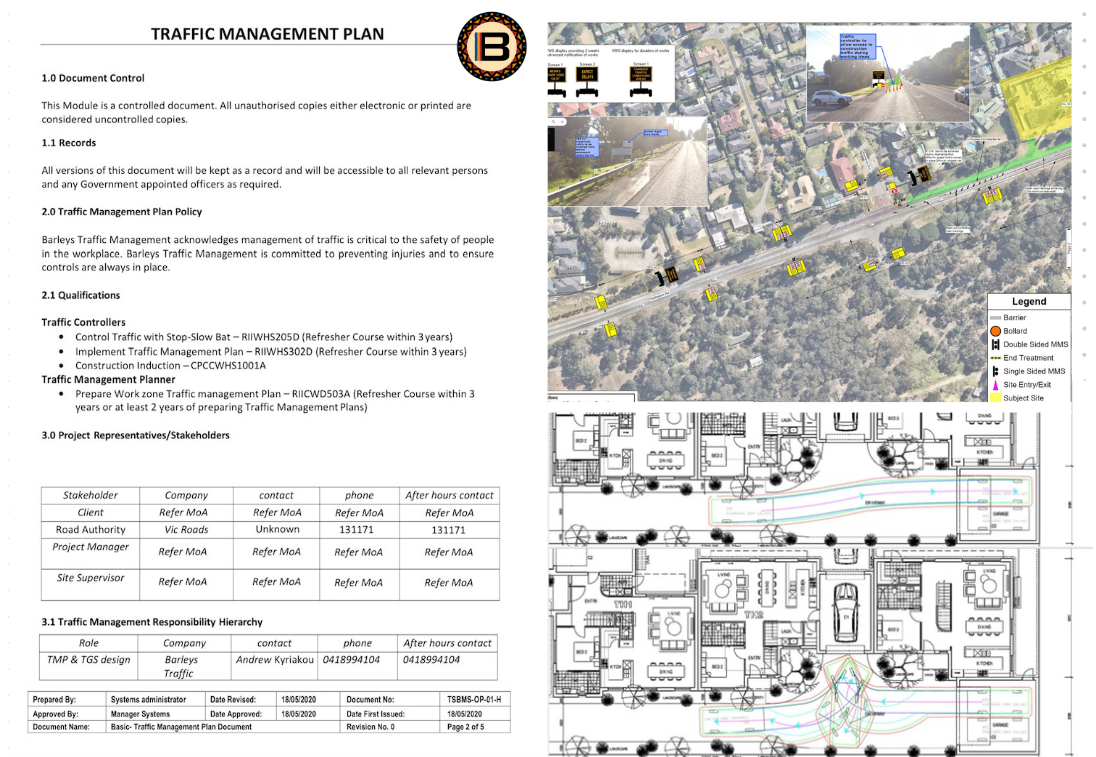
For traffic professionals and engineers, becoming a certified Traffic Management Designer is a key step toward career growth.
Barleys Traffic Management offers specialised courses across Melbourne and other Australian regions, combining advanced design training, compliance knowledge, and practical experience to help you take on more complex projects with confidence.
These programs also include guidance on Traffic Equipment Hire, project planning, and real-world applications to ensure you’re job-ready for the field.
Understanding Traffic Management Designer Courses
Traffic Management Designer (TMD) courses equip professionals with the technical and practical skills to design temporary and permanent traffic solutions.
The training is offered in three levels — TMD1, TMD2, and TMD3 — each focused on building deeper expertise.
TMD1 – Traffic Management Design 1
Focus: Urban streets and low-volume rural roads
Duration: 3 days theoretical + practical workplace assessment
Entry: Completion of relevant Traffic Management Implementer skill sets or AQF Level 6 qualification
Focus Areas: Pedestrian & cyclist controls, lane & shoulder closures, construction site management
TMD2 – Traffic Management Design 2
Focus: High-volume roads
Duration: 3 days theoretical + practical workplace assessment
Entry: Completion of TMD1 and six months’ practical experience
Focus Areas: Roundabouts, public transport interfaces, motorways, and freeway design
TMD3 – Traffic Management Design 3
Focus: Freeways and motorways
Duration: 1 day theoretical + at least 3 practical assessments
Entry: Completion of TMI1 & TMI2 courses, with minimum 2 months experience
Focus Areas: High-speed roads, category 3 freeway management
Participants gain expertise in design principles, practical implementation, and risk assessment through structured theoretical and practical learning. Learn more about each course here: TMD1, TMD2, TMD3.
Benefits of Traffic Management Designer Certification
Obtaining a traffic management designer certification offers multiple advantages for career progression and professional credibility.
Recognition as a qualified designer in Australia’s traffic management industry
Access to higher-responsibility projects in both public and private sectors
Improved career prospects and project leadership opportunities
Enhanced understanding of planning, compliance, and on-site safety
Certification also demonstrates proficiency in implementing traffic control solutions that meet Australian safety regulations. This foundation allows graduates to work confidently on Construction Traffic Management projects across Melbourne.
Advanced Training Modules and Learning Outcomes
Advanced training in traffic management focuses on combining theoretical knowledge with practical application.

Core Modules Include:
Barleys’ courses combine technical design principles with hands-on training.
You’ll learn to:
Develop Temporary Traffic Management (TTM) designs for varied road types
Conduct risk assessments and apply mitigation strategies
Position cones, barriers, and traffic control devices effectively
Integrate plans into construction or event projects
Practical sessions replicate real-world conditions — from urban lanes to freeways — and incorporate a variety of traffic management controls.
Project Planning and Practical Assessments
Traffic Management Designer Courses emphasise project planning, ensuring students can develop robust traffic management plans from concept to execution.
Analyse site conditions and traffic flow
Select the right control devices for each situation
Include pedestrian and cyclist safety in designs
Conduct post-project evaluations for continuous improvement
Workplace assessments reinforce these skills, allowing students to apply their learning in realistic, supervised settings. Check out Traffic Management Plans to understand the type of designs students learn to produce.
Traffic Management Designer Course Overview
Course | Focus Area | Duration | Practical Assessment | Entry Requirements |
TMD1 | Urban streets, low-volume roads | 3 days theoretical | Workplace practical assessment | Traffic Management Implementer skill set or AQF Level 6 White Card Statement of attainment |
TMD2 | High-volume roads | 3 days theoretical | Workplace practical assessment | Completion of TMD1 + 6 months experience |
TMD3 | Freeways, motorways | 1 day theoretical | Minimum 3 practical assessments | Completion of TMI1 & TMI2 + 2 months experience |
This table summarises the course content, practical requirements, and entry criteria for each level, helping candidates choose the right path for career advancement.
Professional Development and Career Opportunities
Completing these courses enables traffic professionals to pursue multiple career paths in Melbourne and across Australia.
Career Opportunities Include:
Traffic management designer or planner
Construction or event site traffic coordinator
Compliance officer for government or private projects
Safety consultant or design team leader
Barleys’ training supports long-term professional development, preparing graduates for advanced and leadership roles within the industry.
Industry Standards and Compliance
We ensure that all courses align with industry standards and Australian safety regulations.
Traffic management plans comply with VicRoads and Safe Work Australia guidelines
All students learn risk assessment and mitigation for temporary traffic management
Courses include compliance training for lane closures, pedestrian access, and high-speed roads
Practical assessments ensure students can implement plans safely on-site
Maintaining high standards ensures graduates are job-ready and trusted by employers for complex traffic management projects.
Enrolment Process for Designer Courses
Enrolling in Traffic Management Designer Courses is straightforward with Barleys:
Steps Include:
Choose the appropriate course (TMD1, TMD2, TMD3)
Complete the online application or contact Barleys’ training team
Submit proof of prior qualifications or practical experience
Receive confirmation with theoretical and practical schedule
Complete theoretical learning followed by practical workplace assessment
For detailed information and application, visit Barleys Traffic Management.
Tips for Success in Designer Courses
Engage fully in both theory and practical assessments
Familiarise yourself with design principles before attending practical sessions
Take notes on project planning and compliance requirements
Participate in simulations to gain hands-on confidence
Seek guidance from instructors on career pathways and industry best practices
Following these tips enhances skill retention, making you a competent traffic management designer ready to handle complex projects.
Conclusion: Advance Your Traffic Management Career
The benefits of traffic management designer certification from Barleys Traffic Management are clear: enhanced expertise, professional credibility, and expanded career opportunities.
Gain nationally recognised certification in TMD1, TMD2, and TMD3 courses
Develop advanced skills in design principles, project planning, and industry compliance
Participate in practical assessments to gain hands-on experience
Access diverse career opportunities in construction, events, and government projects
Start your journey today with Barleys Traffic Management and explore Traffic Management Designer Courses to elevate your career in traffic management in Australia.
FAQs
1. What are the benefits of traffic management designer certification?
Certification validates expertise in traffic management design and enhances employability. Graduates can handle complex projects, comply with Australian safety standards, and access leadership roles.
2. What advanced training is included in designer courses?
Courses include TMD1, TMD2, and TMD3 modules covering urban streets, high-volume roads, and freeways. Students gain practical skills in project planning, risk assessment, and traffic control implementation.
3. What design principles are taught in these courses?
Students learn to develop effective traffic management plans, incorporating pedestrian and vehicle safety, signage placement, and temporary road closures. Emphasis is placed on compliance with regulatory and industry standards.
4. How does project planning feature in the courses?
Courses teach students to assess site requirements, design safe traffic layouts, and implement plans efficiently. Practical assessments reinforce planning skills in real-world scenarios.
5. What professional development opportunities arise after certification?
Graduates can work as traffic designers, coordinators, or compliance officers. Advanced training opens opportunities for leadership roles in construction, events, and government projects.