


Sign Stability Starts Before the Wind Picks Up
When people drive past a roadwork site, they often notice the traffic signs directing them where to go. What they do not always see is the planning, preparation, and ongoing attention that keeps those signs working safely throughout the day.
A temporary traffic control sign does much more than display information. It helps drivers make safe decisions, warns them of changing road conditions, and guides them safely through the work area. For that reason, every sign needs to remain stable, visible, and correctly positioned from the moment it is installed until the work is complete.
For Traffic Controllers, TMIs, Supervisors and Planners, making sure this happens is part of the job every day.
Table of Contents
A Good Setup Starts Before Traffic Arrives
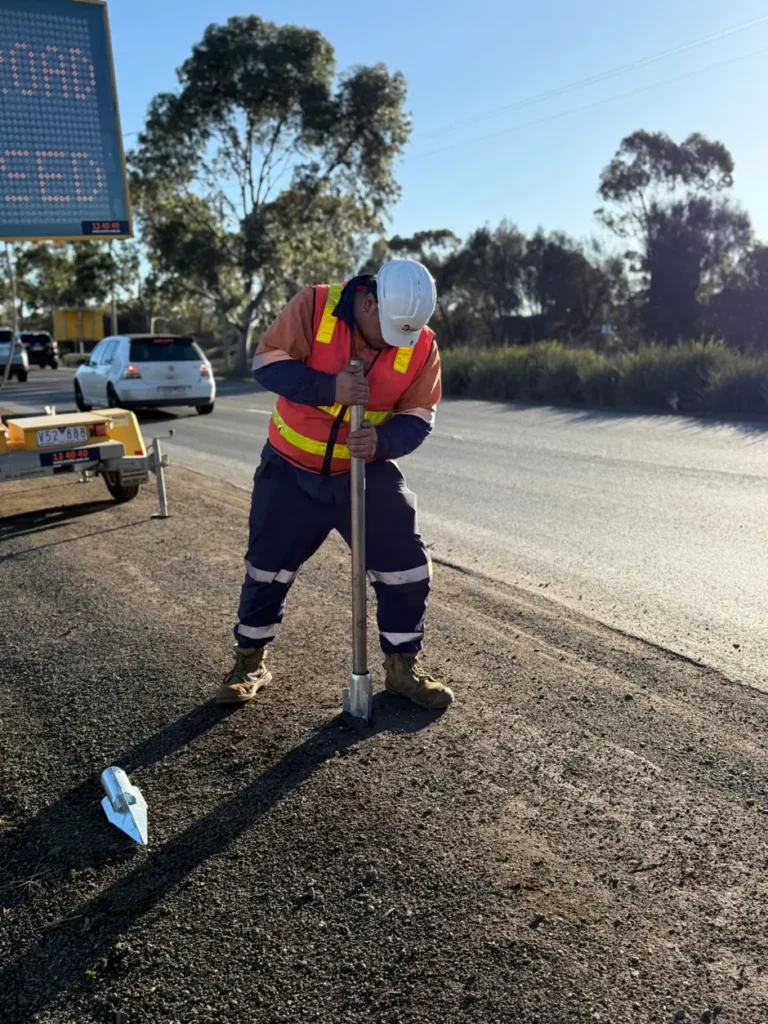
A safe worksite begins with a proper setup. Before the first vehicle approaches, every temporary traffic control device should be installed correctly and checked to ensure it is secure.
The right location, correct orientation, and stable installation all contribute to how well a sign performs. Taking a few extra minutes during setup can prevent problems later in the day and help ensure drivers receive clear and consistent information as they approach the worksite.
Attention to detail at the beginning often prevents unnecessary risks later.
Conditions Can Change Quickly
A sign that is stable in the morning may not remain that way all day.
Strong winds, passing heavy vehicles, changing weather, and normal worksite activity can all affect temporary traffic control devices. Even small movements can reduce visibility or change the message drivers receive.
That is why experienced traffic management professionals never assume the setup will remain perfect without regular checks.
Monitoring Is Part of the Job
Installing a sign is only the first step. Keeping it effective throughout the shift is just as important.
Traffic Controllers, TMIs and Supervisors regularly inspect the worksite to confirm that signs remain secure, clearly visible, and positioned as intended. If conditions change, adjustments are made to ensure the traffic management setup continues to perform as planned.
These regular inspections help identify small issues before they become larger safety risks.
Small Details Make a Big Difference
Many of the safest worksites are the result of small actions carried out consistently.
Checking that a sign has not shifted, confirming it remains visible to approaching traffic, or repositioning equipment after changing weather may only take a few moments, but those actions help protect workers, road users, cyclists, pedestrians, and the wider community.
Good traffic management is built on consistency, not assumptions.
Experience Shows in the Details
Experienced traffic management professionals understand that every piece of equipment on site has a purpose.
Signs, cones, barriers, and other traffic control devices all work together to provide clear guidance for road users. When one element is not performing as intended, the effectiveness of the entire setup can be affected.
That is why professional crews continue monitoring their worksites throughout the day rather than relying only on the initial setup.
Final Thoughts
Effective traffic management is not just about installing signs. It is about making sure they continue to do their job as conditions change throughout the day. By taking the time to set up equipment correctly, carrying out regular inspections, and responding to changing conditions, traffic management professionals help create safer worksites for everyone.
The strongest traffic management teams know that attention to the smallest details often makes the biggest difference. Every secure sign, every routine inspection, and every adjustment made throughout the shift contributes to safer outcomes for workers, road users, and the wider community.
FAQs
Why is sign stability important in traffic management?
Stable signs provide clear and consistent information to road users, helping them make safe decisions as they approach a worksite.
What can affect the stability of temporary traffic signs?
Wind, passing heavy vehicles, weather conditions, and normal worksite activity can all affect temporary traffic control devices.
Why should traffic signs be inspected during a shift?
Conditions can change throughout the day. Regular inspections ensure signs remain secure, visible, and positioned correctly.
Who is responsible for monitoring traffic control devices?
Traffic Controllers, TMIs, Supervisors, and other traffic management professionals all play a role in checking that traffic control devices continue to perform as intended.
How does proper sign installation improve safety?
Correct installation and ongoing monitoring help provide reliable guidance for drivers, reducing confusion and supporting safer traffic flow through temporary work zones.