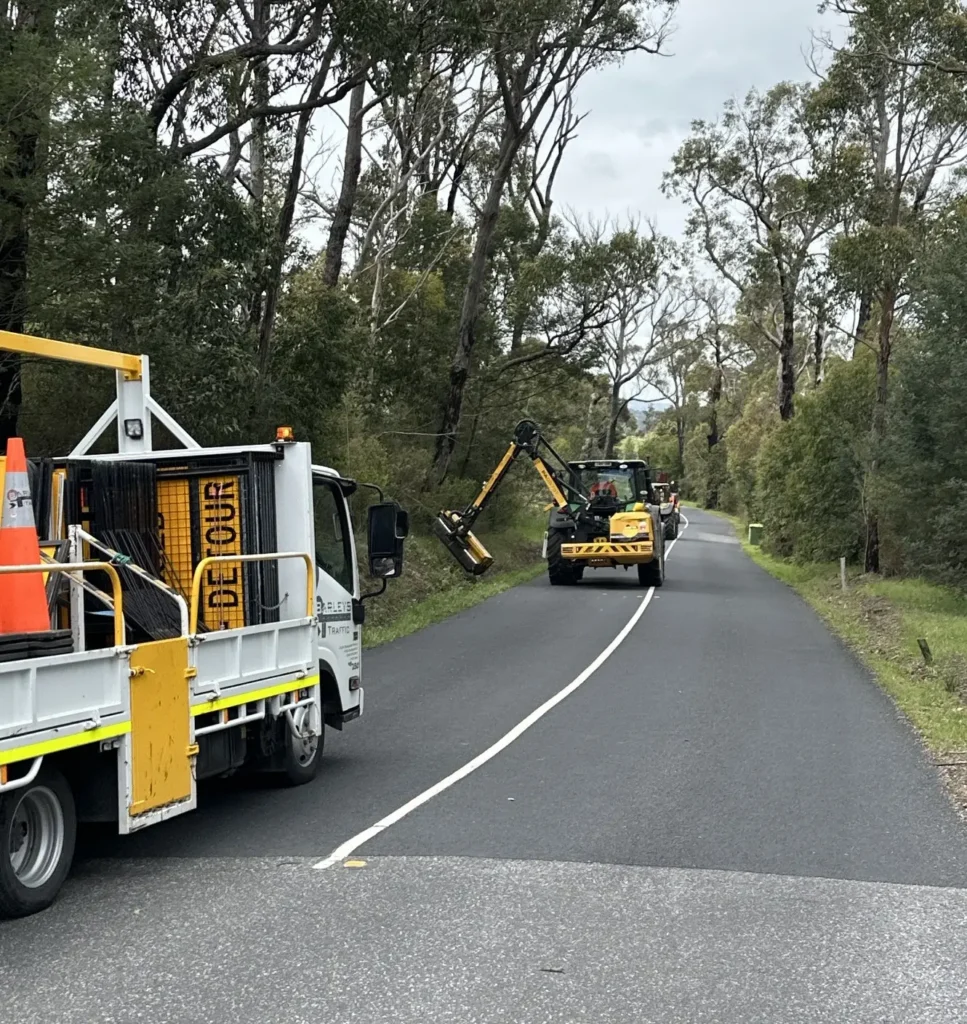



Traffic Management Isn’t Just for Roadworks
When people hear the term traffic management, they often think of roadworks, lane closures, and major infrastructure projects. While these are common applications, traffic management plays an equally important role in many other types of work carried out near live traffic.
From tree maintenance and vegetation management to roadside pruning and powerline clearing, many essential services rely on well planned traffic management to keep workers and the public safe.
Wherever work takes place close to moving vehicles, traffic management helps create a safer environment for everyone.
Table of Contents
More Than Construction Sites
Across Australia, arborists, vegetation management crews, and maintenance teams work on roadsides every day. Their work helps keep roads safe, improves visibility for drivers, protects critical infrastructure, and reduces the risk of falling branches or hazardous trees.
Although these tasks may appear routine, they often take place only metres from live traffic. Workers may need to operate chainsaws, elevated work platforms, chippers, or other specialised equipment while vehicles continue travelling nearby.
Without appropriate traffic management, these environments can quickly become high risk.
Every Worksite Has Different Risks
No two roadside maintenance projects are exactly alike.
One worksite may be located on a quiet suburban street, while another could be beside a busy highway or within a school zone. Some projects require only temporary warning signs, while others may need reduced speed zones, lane closures, traffic controllers, or detours.
Traffic management professionals assess each location individually, considering factors such as traffic volume, road layout, visibility, speed limits, nearby intersections, and pedestrian activity before developing a suitable Traffic Guidance Scheme (TGS).
Careful planning helps ensure risks are managed before work begins.
Creating Safe Work Zones
Effective traffic management creates a clear separation between workers and moving traffic.
Depending on the work being carried out, this may involve advance warning signs, traffic controllers, temporary speed reductions, lane closures, cones, barriers, and other traffic control devices that guide motorists safely through the area.
These measures not only protect work crews but also provide drivers with clear information so they can slow down, remain alert, and travel safely past the worksite.
When road users understand what to expect, everyone benefits.
Teamwork Makes Every Worksite Safer
Successful traffic management relies on good communication between everyone involved on site.
Traffic Controllers, TMIs, Supervisors, arborists, vegetation management crews, and project managers all work together to ensure work is carried out safely and efficiently. As site conditions change throughout the day, traffic management arrangements may also need to be adjusted to maintain a safe working environment.
This ongoing teamwork helps projects continue safely while minimising disruption to the surrounding community.
Supporting Essential Community Services
Roadside vegetation management often happens behind the scenes, but its benefits are seen every day.
Maintaining trees and vegetation improves visibility at intersections, protects powerlines, reduces storm hazards, supports healthier landscapes, and helps keep roads safe for everyone who uses them.
Traffic management plays an important role in allowing these essential maintenance activities to be completed safely without placing workers or road users at unnecessary risk.
It is another example of how traffic management supports communities far beyond traditional road construction.
Final Thoughts
Traffic management is about much more than roadworks. It supports a wide range of essential services that take place near live traffic, including tree maintenance, vegetation management, roadside pruning, and many other maintenance activities.
By carefully assessing risks, planning appropriate traffic control measures, and adapting to changing site conditions, traffic management professionals help create safer workplaces while keeping traffic moving as smoothly as possible.
Whether maintaining roadside vegetation, removing hazardous trees, or protecting workers carrying out essential community services, effective traffic management helps ensure everyone can return home safely at the end of the day.
FAQs
Is traffic management only used for road construction?
No. Traffic management is also used for tree maintenance, vegetation management, utility works, emergency repairs, roadside maintenance, and many other activities carried out near live traffic.
Why is traffic management important during tree maintenance?
Tree maintenance often takes place close to moving vehicles. Traffic management helps protect workers, motorists, cyclists, and pedestrians by creating safe work zones and managing traffic around the site.
What traffic control measures may be used for vegetation management?
Depending on the worksite, traffic management may include reduced speed zones, traffic controllers, warning signs, lane closures, cones, barriers, and clearly marked work areas.
How is a traffic management plan developed?
Traffic management professionals assess the site’s risks, traffic volumes, road conditions, visibility, speed limits, and surrounding environment before selecting appropriate traffic control measures.
Who benefits from effective traffic management?
Everyone benefits, including maintenance crews, Traffic Controllers, motorists, cyclists, pedestrians, local businesses, residents, and the wider community.