



Managing Adverse Weather in Traffic Management
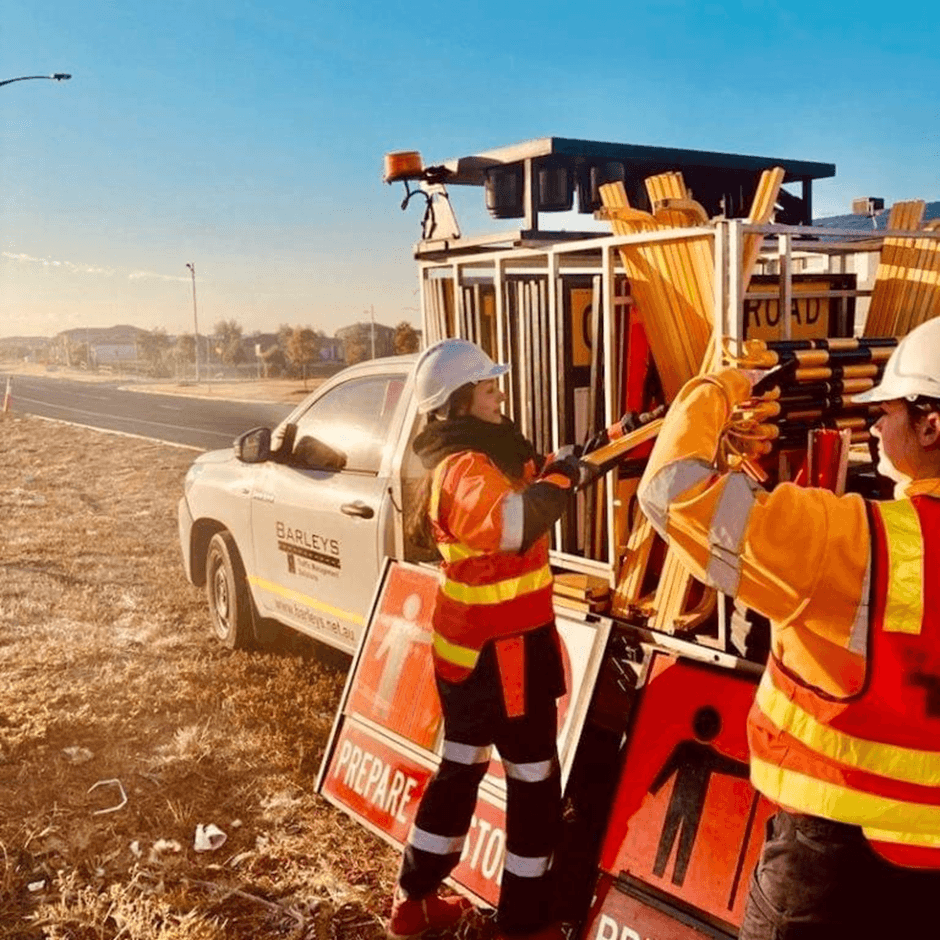
Adverse Weather and Worksite Safety
Weather can change a safe worksite into an unsafe one within minutes. Conditions like strong wind, heat, fog, or heavy rain can affect both workers and road users.
At Barleys Traffic Management, we expect every crew to monitor weather conditions closely and act early. Safety decisions should be made before risks increase, not after something goes wrong.
Why Weather Matters on Site
Traffic management depends on visibility, stable equipment, and clear communication. Weather can affect all of these. Changing conditions can lead to:
- Unstable signs and devices
- Reduced driver visibility
- Slower reaction times
- Increased risk for workers
Understanding how to respond is key to keeping the site safe.
Managing Wind on Site
Strong winds can move or knock over signs, cones, and barriers. This creates confusion for drivers and increases risk. When wind conditions become unsafe:
- Adjust the setup to improve stability
- Lay down signs if they cannot be secured
- Remove any devices that may fall or shift
- Never leave unsafe signage on the road
A stable setup is essential for safe traffic control.
Managing Heat and Worker Safety
Heat stress is a serious risk, especially for traffic controllers working long hours outdoors. To reduce heat related risks:
- Stay hydrated throughout the shift
- Take regular breaks in shaded areas
- Watch for early signs like dizziness or confusion
- Act immediately if symptoms appear
If a worker shows signs of heat stress, stop work and report the situation. Early action can prevent serious health issues.
Adjusting for Low Visibility
Conditions like fog, heavy rain, smoke, or glare can reduce how well drivers see the worksite. To improve safety in low visibility:
- Increase spacing between signs
- Add more advance warning signs
- Use high visibility equipment
- Ensure the site is clearly visible from a distance
If drivers cannot clearly see the work zone, it is not safe to continue.
Knowing When to Stop Work
Sometimes the safest decision is to stop work completely. If weather conditions create risk for workers or road users, work must pause. In these situations:
- Stop work immediately
- Notify your supervisor
- Wait until conditions improve before restarting
Stopping work is not a delay. It is a safety decision.
Our Approach at Barleys Traffic Management
Barleys Traffic Management is an Australian company committed to safety in all conditions. We expect our teams to stay alert, follow procedures, and respond quickly to changing environments.
Weather may be unpredictable, but our response should always be clear, controlled, and focused on safety.
Final Thoughts
Adverse weather is part of working on the road, but it must be managed carefully. Monitoring conditions, adjusting setups, and knowing when to stop work helps protect everyone on site.
Act early. Stay aware. Put safety first.
FAQs
Why is weather a risk in traffic management?
Weather can affect visibility, equipment stability, and worker safety, increasing the risk of accidents.
What should be done in high wind conditions?
How can heat stress be managed on site?
Stay hydrated, take breaks, and watch for early symptoms. Stop work if needed.
What should crews do in low visibility conditions?
Increase signage, improve visibility, and ensure drivers can clearly see the worksite.
When should work be stopped due to weather?
Work should stop when conditions become unsafe for workers or road users and resume only when it is safe.